That House That’s Been Sitting Could Be Your Best Shot at a Deal

BLOGJune 22, 2026


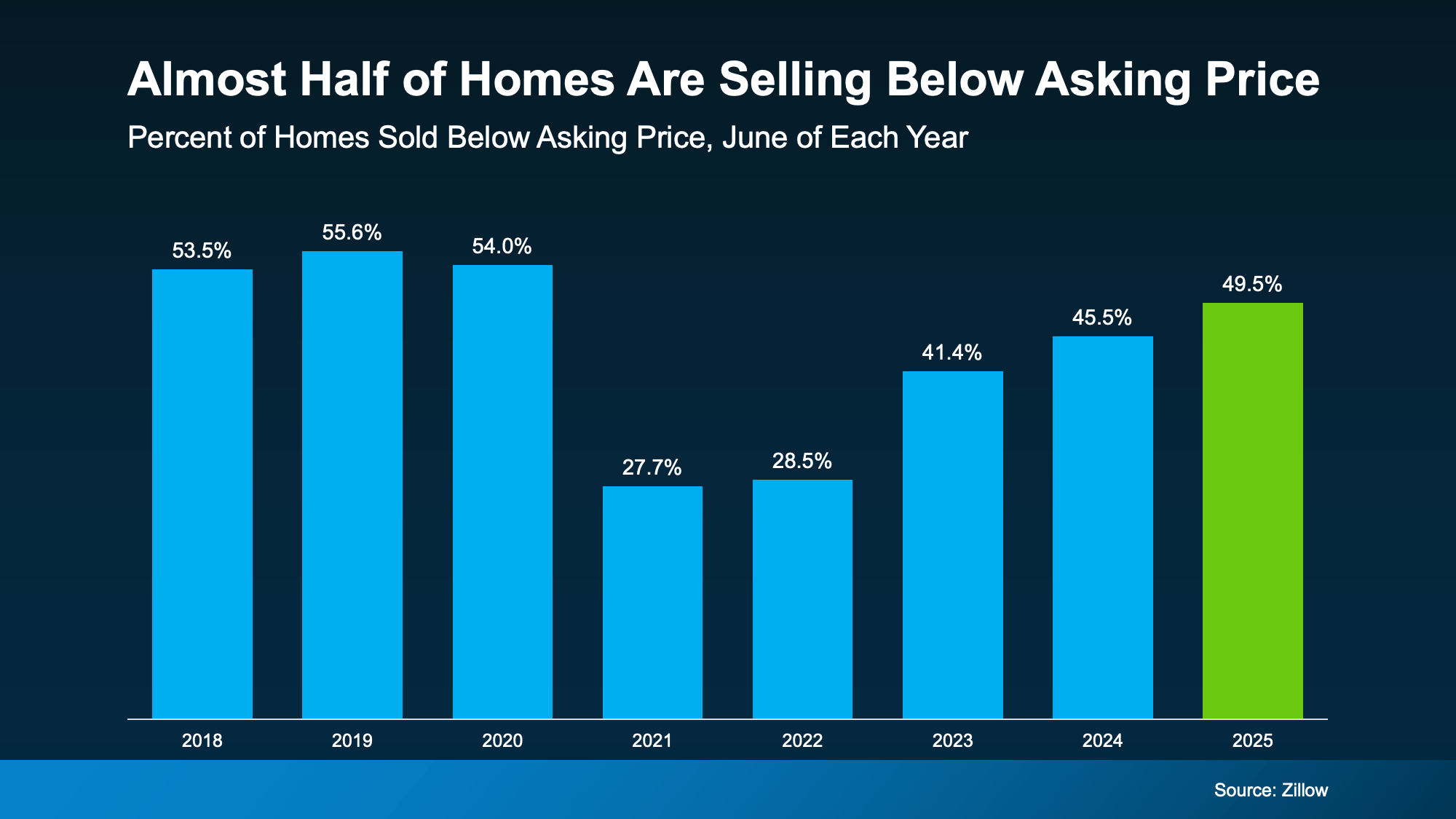
Open up a home search and you'll see them. Listings that have been on the market for two months. Three. Some longer.

Most buyers scroll right past them, assuming something’s wrong with the house. But that instinct could be costing you, since the longer a home sits, the more motivated the seller usually gets.

Where Some Buyers Are Finding Better Deals

If affordability has been your #1 hurdle to buying, here’s a surprisingly simple strategy that could help you finally get your foot in the door. Start with the homes that have been sitting the longest. That’s often where the best deals are.

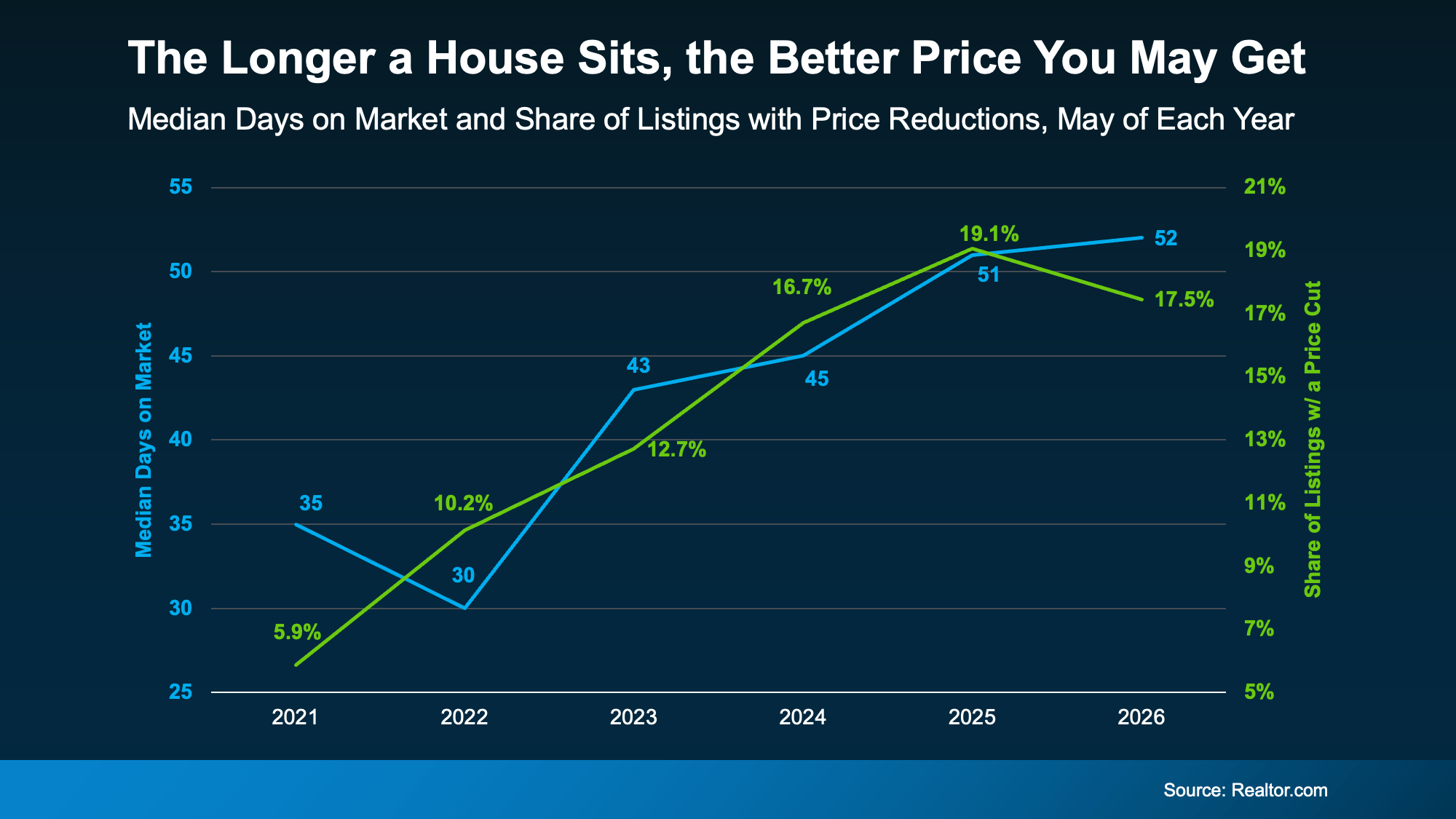
Here’s why. Data from Realtor.com shows there’s a connection between longer time on the market and lower sales prices. Basically, the longer a house sits, the more likely it is that the seller will reduce the price (see graph below):

a graph with numbers and lines

The blue line tracks how long homes stay on the market, while the green line tracks the share of homes getting a price reduction. As one climbs, so does the other.  

And if you focus on these homes that are just sitting and waiting, the opportunity for you is bigger than you may think right now.

Redfin data shows there’s $347 billion worth of stale listings on the market right now – more than ever before for this time of year. So, ask your agent to filter listings for you from oldest to newest. The home that fits your budget might already be there. Just further down the list than you thought.

Lingering Doesn’t Always Mean Something’s Wrong 

Let’s say you do that and something catches your eye. Still, you might be questioning why the home has been sitting in the first place. Just remember, sometimes it has nothing to do with the home itself.

According to Redfin, common causes are:

  • The asking price was set too high to start

  • The home didn’t show well online

  • There are a lot of homes for sale in the area, so it just got buried

So, nothing that’s necessarily a dealbreaker, or even anything that’s wrong with the home itself. If there’s a real issue, a thorough inspection will surface it. And that’s information you can use to negotiate. Not a reason to assume it’s a house worth skipping over.

How To Turn a Lingering Listing into a Win

So how do you capitalize on a lingering listing? According to USA Today, you have two main levers to pull.

The first is price. Work with your agent to study what comparable homes recently sold for, then build an offer around that. Coming in below asking price is fair game when a home has been sitting.

The second is concessions. If a seller won’t budge much on price, they may still help in other ways, like covering some closing costs, repair credits, or even a mortgage rate buydown that lowers your monthly payment.

A local agent has the context to tell which homes are the real opportunities and which are skippable.

Bottom Line

A house sitting on the market isn’t always a glaring red flag. In today’s market, it may be your best opportunity yet.

For help deciding which lingering listings are actually worth a second look, let’s connect.

The information contained, and the opinions expressed, in this article are not intended to be construed as investment advice. Keeping Current Matters, Inc. does not guarantee or warrant the accuracy or completeness of the information or opinions contained herein. Nothing herein should be construed as investment advice. You should always conduct your own research and due diligence and obtain professional advice before making any investment decision. Keeping Current Matters, Inc. will not be liable for any loss or damage caused by your reliance on the information or opinions contained herein.

Aug. 20, 2025

Condos Could Be a Win for Today’s Buyers

Condos Could Be a Win for Today’s Buyers

BLOGAugust 20, 2025


Not every homebuyer wants the biggest house on the block. Some want something simpler, more affordable, and easier to maintain, especially in a market where every dollar counts. That’s where condos come in.

For first-time buyers, they can be a smart way to get into homeownership without stretching your budget. For downsizers, they offer less space to maintain with the flexibility to stay in a great location.

And right now, condos are one of the most buyer-friendly parts of the market.

Condo Inventory Is Up, And That Means More Choice

According to the National Association of Realtors (NAR), there are 194,000 condos for sale right now. That’s the second highest amount we’ve seen in the last three years (see graph below):

a graph of blue lines with white text

Just remember, this is the national figure. The exact number is going to vary based on where you’re looking to buy. But, generally speaking, you have more options and less competition.

You’re not stuck waiting for something to pop up or rushing into an offer just to beat someone else to it. You’ve got plenty to choose from. And if you’re particular about layout, location, or amenities, this is your chance to be selective.

That’s a big shift from the market frenzy of just a few years ago. Compared to early 2022, we’ve got nearly double the condos available now. That gives you more breathing room to find the right fit.

Prices Are Cooling, and Buyers Hold More Negotiating Power

And since there are more for sale, many sellers are more open to negotiating right now. So, you may be able to get a better price. As Redfin explains:

“. . . condo buyers in many cities may be able to find sellers who are willing to give concessions and/or sell for less than their asking price.”

Condo prices are starting to ease in many markets. According to Intercontinental Exchange (ICE), condo prices dipped 1.3% in June compared to last year. And over half of the top 100 U.S. metros saw condo prices drop slightly year-over-year.

Data from Redfin shows what the recent dip in prices looks like (see graph below):

a graph showing the price of a sales increaseThat doesn’t just help with affordability, it also shifts the power dynamic. Condo buyers in many markets are now in a position to negotiate on price and ask for concessions, like help with closing costs.

Bottom Line

Condos aren’t just a fallback option. In today’s market, they’re one of the most strategic ways to buy. With more options, softening prices, and more room to negotiate, now could be the right time to make your move.

Could a condo check more boxes than you expected? Let’s talk through your options and find out.

The information contained, and the opinions expressed, in this article are not intended to be construed as investment advice. Keeping Current Matters, Inc. does not guarantee or warrant the accuracy or completeness of the information or opinions contained herein. Nothing herein should be construed as investment advice. You should always conduct your own research and due diligence and obtain professional advice before making any investment decision. Keeping Current Matters, Inc. will not be liable for any loss or damage caused by your reliance on the information or opinions contained herein.

Posted in Market Updates
Aug. 19, 2025

Even a Small Change in Rates Can Lower Your Monthly Payment Chart

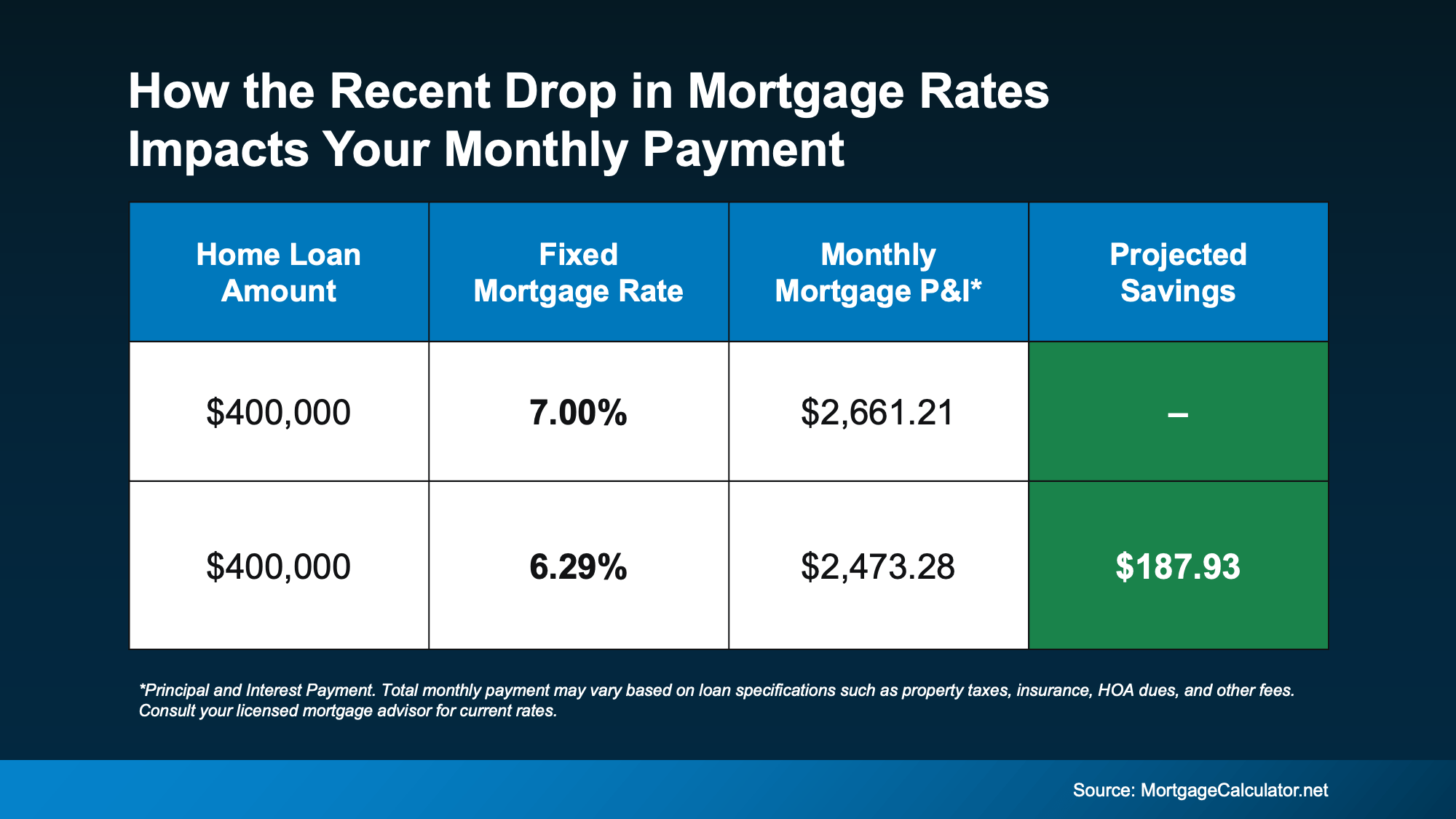
Over the past few weeks, mortgage rates hit their lowest point of the year – and it was big news. So, what you need to know if you’re buying a home is, whenever these shifts happen (whether they’re now or later), even a small change in rates can make a big difference in your monthly payment. While major drops in mortgage rates aren’t projected for the rest of 2025, smaller declines are still expected – depending on where the economy goes from here. If you want to see what the math looks like at another home loan amount or mortgage rate, DM me and I’ll run the numbers for you, so you can plan ahead.


Posted in Market Updates
Aug. 19, 2025

More Contracts Are Falling Through. Here’s How To Get Ahead.

More Contracts Are Falling Through. Here’s How To Get Ahead.

BLOGAugust 18, 2025


When you sell a house, the last thing you want is for the deal to fall apart right before closing. But according to the latest data from Redfin, that’s happening a bit more often lately. The good news is, it’s completely avoidable if you lean on an agent for insight into why that is and how to avoid it happening to you.

This June, 15% of pending home sales fell through. That means those buyers backed out of their contracts. That’s not too much higher than the norm of roughly 12% from 2017-2019, but it’s still an increase. And it’s one you don’t want to have to deal with. 

The key to avoiding this headache is knowing what’s causing the issues that lead to a buyer walking away. A recent survey from John Burns Research and Consulting (JBREC) and Keeping Current Matters (KCM) finds that agents reported the #1 reason deals are falling apart today is stemming from the home inspection (see graph below):

a graph of a number of individualsHere’s why. With high prices and mortgage rates stretching buyers’ budgets, they don’t have a lot of room (or appetite) for unexpected repairs.

Not to mention, buyers have more options to choose from now that there are more homes on the market. So, if the inspection turns up a major issue, they may opt to walk away. Afterall, there are plenty of other homes they could buy instead.

Or, if the seller isn’t willing to tackle repairs, a buyer may back out because they don’t want the expense (and the hassle) of dealing with those issues themselves.

The good news is, there’s a way you can get ahead of any unpleasant surprises as a seller, and that’s getting a pre-listing inspection. It’s not required, but the National Association of Realtors (NAR) explains why it’s helpful right now:

“To keep deals from unraveling . . . it allows a seller the opportunity to address any repairs before the For Sale sign even goes up. It also can help avoid surprises like a costly plumbing problem, a failing roof or an outdated electrical panel that could cause financially stretched buyers to bolt before closing.”

What’s a Pre-Listing Inspection?

It's exactly what it sounds like: a professional home inspection you schedule before your home hits the market. Here’s what it can do for you:

  • Give you time to fix what matters. You’ll know what issues could come up in the buyer’s inspection. So, you’ll have time to take care of them before anyone even walks through the door.
  • Avoid last-minute renegotiations. When buyers uncover unexpected issues after you’re under contract, it opens the door for concessions you may have to make like price drops or repairs, or worse, a canceled deal. A pre-listing inspection helps you stay ahead of those things before they become deal breakers.
  • Show buyers you’re serious. When your home is clean, well-maintained, and already vetted, buyers see that. It builds trust and can help you sell faster with fewer back-and-forth negotiations.

The bottom line? A few hundred dollars upfront can save you thousands later.

Should Every Seller Do This?

Not necessarily. Your real estate agent can help you decide what makes the most sense for your situation, your house, and your market. If you decide to move forward with a pre-listing inspection, your agent will guide you every step of the way. They’ll:

  • Advise on whether to fix or disclose each issue
  • Help you prioritize repairs based on what buyers in your area care about
  • Make sure you understand your local disclosure laws

Bottom Line

If you want to avoid potential snags in your deal, a pre-listing inspection could be the way to go. Let’s talk about whether a pre-listing inspection is the right move for your house and market.

Would you rather find out about a major repair now, when you can handle it on your terms – or after you’re under contract, when the clock is ticking?

The information contained, and the opinions expressed, in this article are not intended to be construed as investment advice. Keeping Current Matters, Inc. does not guarantee or warrant the accuracy or completeness of the information or opinions contained herein. Nothing herein should be construed as investment advice. You should always conduct your own research and due diligence and obtain professional advice before making any investment decision. Keeping Current Matters, Inc. will not be liable for any loss or damage caused by your reliance on the information or opinions contained herein.

Posted in Market Updates
Aug. 13, 2025

Are These Myths About Buying a Newly Built Home Holding You Back?

Are These Myths About Buying a Newly Built Home Holding You Back?

BLOGAugust 13, 2025


If you’ve been skipping over newly built homes in your search, you might be doing so based on outdated assumptions. Let’s clear up a few of the most common myths, so you don’t miss out on a solid opportunity.

Myth 1: New Homes Are More Expensive

It’s easy to assume a new build will cost more than an existing home, but that’s not necessarily true, especially right now.

Data from Census and the National Association of Realtors (NAR) shows the median price of a newly built home today is actually lower than a home that’s been lived in already (an existing home):

a graph of sales and pricesSo, why’s this happening? As Heather Long, Chief Economist at Navy Federal Credit Union, explains:

This largely reflects two trends: New homes are getting smaller on average, and builders are doing more price cuts.”

If you’ve ruled out new construction based on price alone, it’s time to take another look. Talk to your local real estate agent to see what’s available (and at what price points).

Myth 2: Builders Don't Negotiate

Many buyers assume builders aren’t going to play ball when it comes time to negotiate. But that's just not the case. A number of builders are sitting on finished inventory they want to sell quickly. And that makes them more open to compromising. Mark Fleming, Chief Economist at First American, explains a builder:

“. . . would love to sell you the home because they’re not living in it. It costs money not to sell the home. And many of the public home builders have said in their earnings calls that they are not going to be pulling back on incentives, especially the mortgage rate buydown . . .” 

That means you may find builders more flexible than individual sellers, and more motivated to toss in incentives to get the deal done. According to Zonda75% of new home communities offered incentives on new homes considered quick move-ins in June.

Myth 3: They Don’t Build Them Like They Used To

Some people think newer homes lack the craftsmanship of older ones. But here’s a reality check. Quality can vary in any era. And using a reputable builder matters more than the build date.

According to the National Association of Home Builders (NAHB), a good way to gauge quality is by talking to buyers who have purchased from that builder recently. In an article, NAHB explains:

“Any high-quality builder should be ready to provide you with the names and phone numbers of satisfied customers. If they cannot, consider that a red flag and walk away.

The article suggests asking those buyers questions like:

  • Did the builder meet their expectations?
  • Would you use that same builder, if you were to do it again?

But you can also ask your agent about the builder’s reputation. Generally, agents know about the builders active in your area and may even have experience with past clients who have bought a home in one of that builder’s communities.

Myth 4: You Don't Need Your Own Real Estate Agent

This might be the biggest myth of all. The truth is, when you buy a brand-new home, using your own agent is even more important. Builder contracts have different fine print, and you’ll want a pro on your side who can really explain what you’re signing and advocate for your best interests.

These stats seem to prove that’s the case. In a Realtor.com survey, buyers who purchased a newly built home rated their agents far more helpful than the builder (or the builder’s representative) during the process (see visual below):a screenshot of a graph

Bottom Line

Don’t let misconceptions keep you from exploring one of the most promising options in today’s housing market.

Whether you’re curious about what’s being built nearby or wondering if a new home fits your budget, let’s connect and take a closer look. You might be surprised by what’s out there.

The information contained, and the opinions expressed, in this article are not intended to be construed as investment advice. Keeping Current Matters, Inc. does not guarantee or warrant the accuracy or completeness of the information or opinions contained herein. Nothing herein should be construed as investment advice. You should always conduct your own research and due diligence and obtain professional advice before making any investment decision. Keeping Current Matters, Inc. will not be liable for any loss or damage caused by your reliance on the information or opinions contained herein.

Posted in Market Updates
Aug. 12, 2025

What You Need To Know About Concessions

What You Need To Know About Concessions

INFOGRAPHICAugust 12, 2025

a screenshot of a phone

Some Highlights

  • Now that there are more homes for sale, buyers have more options. And sellers need to be more flexible to close the deal.
  • That's why almost half of homeowners are making some type of concession. This can include covering closing costs, paying for repairs, or dropping the price.
  • Not sure which concessions to offer? Let’s connect so you know what’s working for sellers in our market.

The information contained, and the opinions expressed, in this article are not intended to be construed as investment advice. Keeping Current Matters, Inc. does not guarantee or warrant the accuracy or completeness of the information or opinions contained herein. Nothing herein should be construed as investment advice. You should always conduct your own research and due diligence and obtain professional advice before making any investment decision. Keeping Current Matters, Inc. will not be liable for any loss or damage caused by your reliance on the information or opinions contained herein.

Posted in Market Updates
Aug. 12, 2025

Online Home-Buying Search Terms Recently Hit 2-Year High

Online Home-Buying Search Terms Recently Hit 2-Year High

BLOGAugust 11, 2025


Believe it or not, there are clear signs buyer interest is heating up again.

Let’s talk about what’s really going on behind the scenes, and why the housing market might not be as quiet out there as it seems. 

Buyers Are Looking, and Search Trends Prove It

One of the clearest ways to measure what people are thinking about is to look at what they’re searching for online. And according to Google Trends, searches for phrases like “home for sale” have been climbing steadily this year.

The graph below shows an index of two common homebuyer search phrases and how popular they were on Google over the past two years. The higher the line goes, the more popular that phrase was. A 100 on the graph shows the most popular time for each phrase:

a graph of a number of peopleHere’s what really stands out in this data. Both phrases have been trending up overall this year, and they hit a recent high in mid-July. That’s a pretty strong sign that curiosity (and maybe even interest) in buying a home is improving.

That kind of momentum means something. Despite high mortgage rates and home prices, buyers haven’t given up. They're still watching the market. They’re still browsing. And many are just waiting for the right opportunity to act. Maybe your house is exactly what they’re looking for. But you’ll never know if it’s not listed yet.

Now, this doesn’t mean demand is going to surge like it did during the pandemic. It just means some buyers are deciding they can’t wait any longer. And those are exactly the kind of buyers you want. MotivatedEager. Ready to move when the right house comes along.

So, if you’re holding off on selling because you’re not sure if the demand is there, this data suggests it might be time to rethink your plans. Because while it’s not 2021-level demand, it doesn’t need to be. You don’t need ten offers to sell your home. You just need the right buyer.

And that buyer may be searching for a house like yours right now.

Bottom Line

If you’ve been thinking, “I’ll sell once buyers come back,” you might want to take another look. Online search trends show they’re already interested.

What would make you feel confident putting your house on the market this year? Let’s connect to talk through it.

The information contained, and the opinions expressed, in this article are not intended to be construed as investment advice. Keeping Current Matters, Inc. does not guarantee or warrant the accuracy or completeness of the information or opinions contained herein. Nothing herein should be construed as investment advice. You should always conduct your own research and due diligence and obtain professional advice before making any investment decision. Keeping Current Matters, Inc. will not be liable for any loss or damage caused by your reliance on the information

Posted in Market Updates
Aug. 7, 2025

Why Selling Without an Agent Can Cost You More Than You Think

Why Selling Without an Agent Can Cost You More Than You Think

BLOGAugust 7, 2025


Cutting out the agent might seem like a smart way to save when you sell your house. But here’s the hard truth.

Last year, homes that sold with an agent went for almost 15% more than those that sold without one.

a graph of sales and salesThat gap is pretty hard to ignore. And with more homes on the market to compete with right now, selling on your own is a mistake that’s going to cost you.

This Isn’t the Market for DIY Selling

A few years ago, you might’ve gotten away with a “For Sale By Owner” (FSBO) sign in your yard, navigating the process on your own. That’s because homes were flying off the market and buyers were pulling out all the stops. But that’s just not the case anymore. With more inventory than we’ve seen in years, we’re not in a “list it and they will come” market anymore. You need professional expertise.

A yard sign and some photos you take on your own won’t cut it.

Right now, the housing market is getting back to what most would consider a more normal balance of buyers and sellers, and that really changes the game. According to Realtor.comthe latest number of listings for sale was the highest it’s been in any month of July since 2019 (see graph below):

a graph of blue bars with white textAnd while inventory growth is going to vary by local market, nationally, this graph shows the number of homes for sale is inching back toward normal.

With more listings available, that means buyers can be more selective. They’ll compare your home to others on price, condition, photos, location, and more. If yours doesn’t stand out, it will get skipped over.

More Inventory = More Competition for You

Selling today requires the latest pricing strategy, expert prep work, professional marketing, and strong negotiation skills. And if you’re not bringing all of that to the table, chances are, you’re going to feel it in your bottom line.

More Homeowners Are Turning To the Pros

That’s why even more home sellers are working with agents today. Data from the National Association of Realtors (NAR) shows a record-low percentage of homeowners sold without an agent last year. And the few sellers who tried to sell on their own realized their mistake pretty quickly.

According to Zillow, 21% of homeowners ended up hiring an agent anyway after struggling to sell on their own.

So, why take the risk? With a local pro, you'll have:

  • Pricing precision to attract buyers and maximize your return
  • Expert staging and presentation advice to highlight your home’s best features
  • Pro-level marketing, including the best exposure and access to buyer networks you can’t reach on your own
  • Skilled negotiation to evaluate offers and navigate inspections, protecting your bottom line
  • Local market expertise that helps your listing stand out based on what inventory looks like in your area

An agent's expertise isn’t optional anymore. It’s essential.

Bottom Line

In a market with more listings and pickier buyers, many sellers who try to sell on their own end up working with an agent anyway. So why not start there?

Let’s connect so you have a pro who knows exactly what it takes to sell your house in today’s market, for the best possible price, without leaving money on the table.

Reach out if you want a professional assessment on what your house could sell for today.

The information contained, and the opinions expressed, in this article are not intended to be construed as investment advice. Keeping Current Matters, Inc. does not guarantee or warrant the accuracy or completeness of the information or opinions contained herein. Nothing herein should be construed as investment advice. You should always conduct your own research and due diligence and obtain professional advice before making any investment decision. Keeping Current Matters, Inc. will not be liable for any loss or damage caused by your reliance on the information or opinions contained herein.

Posted in Market Updates
Aug. 7, 2025

A Second Home Might Be the Missing Piece in Your Retirement Plan

A Second Home Might Be the Missing Piece in Your Retirement Plan

BLOGAugust 6, 2025


Are you wondering if you’re on track to retire someday?

According to Intuit, 69% of people say today’s financial environment makes it tough to plan for the future, and 68% aren’t sure they’ll ever be able to retire. That’s why many people are exploring new ways to build stability and long-term income.

And that’s where real estate comes in.

Why Real Estate? Here’s What It Can Do for You

If you’re able to make the numbers work, buying a second home can be a powerful tool for your future retirement. It could help you:

  • Build wealth over time: As home prices rise through the years, your second home should grow in value and increase your net worth.
  • Generate extra income: Renting the home could bring in some extra income you can add to your existing retirement savings. Just remember, some of the rent coming in will need to be used to pay that mortgage and maintain that house. 
  • Profit in the future: You may decide to sell the second home down the road and use the profit from that sale to give your retirement funds a boost.
  • Diversify your financial assets: Real estate offers a tangible asset that can help reduce your dependence on just stocks or savings, making your overall financial picture more stable.

Most Second Homeowners Aren’t Big Investors

And if you’re thinking: wait, owning multiple homes is only for big investors – data shows that's not necessarily true. Many homeowners who buy an additional property aren’t the big investors you hear so much about. They’re people like your neighbors.

In fact, data from BatchData and CJ Patrick Company shows 85% of people who own more than one property have just 1 to 5 homes (see graph below):

a screenshot of a graphThat means most who own multiple homes are people (not large investors) who’ve bought an extra home to rent out or hold onto for later.

Why Now Might Be the Right Time

And right now, the door may be opening for buyers like you. According to Danielle Hale, Chief Economist at Realtor.com:

“. . . the balance of power in the housing market keeps shifting in favor of homebuyers. . . A confluence of factors—including more homes for sale, rising price cuts, and slower-moving inventory—is giving buyers more leverage than they've had in years . . .

If you live in an area where home prices are expected to rise, buying another property now and selling it later could help fund your future. Or you could rent it out and earn income now.

Start with Just a Few Trusted Pros

If this idea sounds interesting, the most important first step is to connect with a few key people who can guide you through the process:

  • local real estate agent who understands the market
  • lender who specializes in second home or investment loans

Surrounding yourself with the right pros can help you make confident decisions from day one.

Bottom Line

Let’s talk about what’s possible and explore whether owning a second home could bring you more security and peace of mind for the road ahead.

If a second home could help you retire earlier or with more freedom, would you want to take a closer look?

The information contained, and the opinions expressed, in this article are not intended to be construed as investment advice. Keeping Current Matters, Inc. does not guarantee or warrant the accuracy or completeness of the information or opinions contained herein. Nothing herein should be construed as investment advice. You should always conduct your own research and due diligence and obtain professional advice before making any investment decision. Keeping Current Matters, Inc. will not be liable for any loss or damage caused by your reliance on the information or opinions contained herein.

Posted in Market Updates
July 28, 2025

Today’s Tale of Two Housing Markets

Today’s Tale of Two Housing Markets

BLOGJuly 28, 2025


Depending on where you live, the housing market could feel red-hot or strangely quiet right now. The truth is, local markets are starting to move in different directions. In some places, buyers are calling the shots. In others, sellers still hold the power. It’s a tale of two markets.

What’s a Buyer’s Market vs. a Seller’s Market?

In a buyer’s market, there are more homes for sale and not as many buyers. That means homes sit longer, buyers have more negotiating power, and prices tend to soften as a result. It’s simple supply and demand.

On the flip side, a seller’s market happens when there aren’t enough homes available for the number of people looking to buy them. Because buyers have to compete with each other to get the house they want, that leads to faster sales, multiple offers, and rising prices.

Right now, both of these scenarios are playing out, depending on where you are. So, how do you know what kind of market you’re in? Lean on a local real estate agent. They’ll explain what’s really happening in your area based on these key drivers.

The Number of Buyers and Sellers by Region

One of the biggest factors impacting each market is the number of active buyers and sellers. According to Redfin, here’s what that looks like by region (see graph below):

a graph of salesToday, the Northeast and Midwest are more likely to be seller’s markets. Buyers still outnumber sellers there, and that keeps things tilted in favor of homeowners. Generally speaking, homes are selling faster and prices are rising in those areas.

But the South and West are leaning more toward buyer’s markets. There are more sellers than buyers, which means more listings to choose from and less competition among buyers.

That’s a major shift from a few years ago when sellers had the advantage almost everywhere. Today, your local conditions matter more than ever – and they can vary even from one neighborhood to the next.

Price Trends Mirror the Buyer/Seller Divide

When inventory and buyer activity shift, so do prices. In places where demand still outpaces supply, like much of the Northeast and Midwest, prices are continuing to climb.

But in parts of the South and West where inventory is up and demand has cooled, prices are softening. And that’s a plus for buyers looking to negotiate in those areas.

Here’s the latest price data from ResiClub to show how this divide is shaking out across the top metros in the country (see graph below):

a graph of different colored linesThis is why it’s the tale of two markets. Roughly half of the top 50 metros are up, and half are relatively flat or down.

That said, don’t panic if you own a home in a market where prices are dipping. Most homeowners have built up significant equity over the past few years, and chances are you have too. So, you’re likely still come out way ahead when you sell.

Why Local Insights Matter

Even in regions that lean more buyer-friendly right now, there will be cities, towns, and even neighborhoods that don’t follow the regional trends. That’s why an agent’s local market expertise is so important. They can help you understand what’s happening all the way down to a zip code level, including:

  • Whether your area is favoring buyers or sellers
  • How to set the right price or craft an offer strategy based on local trends
  • The best way to make your move happen, no matter what’s happening in the market

Bottom Line

In a market where conditions vary this much from place to place, success starts with understanding every aspect of your local area. Let’s connect so you’ve got an expert in your corner who knows exactly how to guide you through your market, wherever you are.

The information contained, and the opinions expressed, in this article are not intended to be construed as investment advice. Keeping Current Matters, Inc. does not guarantee or warrant the accuracy or completeness of the information or opinions contained herein. Nothing herein should be construed as investment advice. You should always conduct your own research and due diligence and obtain professional advice before making any investment decision. Keeping Current Matters, Inc. will not be liable for any loss or damage caused by your reliance on the information or opinions contained herein.

Posted in Market Updates
July 24, 2025

Housing Market Forecasts for the Rest of 2025 BLOG July 24, 2025

Housing Market Forecasts for the Rest of 2025

BLOGJuly 24, 2025


If you’ve been watching the market, you’ve likely noticed a few changes already this year. But what’s next? From home prices to mortgage rates, here’s what the latest expert forecasts suggest for the rest of 2025 – and what these shifts could mean for you.

Will Home Prices Fall?

Many buyers are hoping home prices will come down soon. And recent headlines about prices dipping in some areas are making some people believe it's just a matter of time before there’s a bigger drop. But here are the facts.

While home price growth is slowing down, that doesn’t mean we’re headed for a crash. As NAHB explains:

“House price growth slowed . . . partly due to a decline in demand and an increase in supply. Persistent high mortgage rates and increased inventory combined to ease upward pressure on house prices. These factors signaled a cooling market, following rapid gains seen in previous years.”

But experts say, even with that slowdown, prices will still rise this year at the national level. The average of 8 leading forecasters shows prices are expected to go up 1.5-2% in 2025 (see graph below):

That means, if you’re waiting for a major drop, experts agree that’s just not in the cards.

Keep in mind, while some markets are already seeing prices come down slightly, the average dip is just -3.5%. That’s a far cry from the nearly 20% decline the market experienced during the 2008 crash.

Plus, those small changes are easily absorbed when you consider how much home prices have climbed over the past few years. Data from the Federal Housing Finance Agency (FHFA) shows prices are up 55% nationally compared to just 5 years ago.

The takeaway? Prices aren’t crashing. They’re expected to keep climbing – just not as quickly these days. And some may argue they’ll be closer to flat by the end of this year. But, again, this is going to vary by market, with some local ups and downs. So, lean on a pro to see the latest price trends for your area.

Will Mortgage Rates Come Down?

Another common thought among today’s buyers is: I’m just going to wait for rates to come down. But is that a smart strategy? According to Yahoo Finance:

"If you’re looking for a substantial interest rate drop in 2025, you’ll likely be left waiting. The latest news from the Federal Reserve and other key economic data point toward steady mortgage rates on par with what we see today."

In other words, don’t try to time the market or wait for a drop that may not be coming. Most experts say rates will remain in the 6s, and current projections have them settling in the mid-6% range by the end of this year (see chart below):

a blue rectangular table with white textAnd that’s not a big change from where they are right now. So, if you need to move, let’s talk about how to make it happen and what you should watch for. Because while rates may not be as low as you want them to be, you don’t want to put your needs on the back burner, hoping for something the data shows isn’t likely to happen.

Working with an expert who is keeping an eye on all the economic factors that can influence mortgage rates is going to be essential this year. That’s because changes in things like inflation and other key drivers could impact how rates move going forward. 

The Takeaway for Buyers and Sellers

Whether you're buying, selling, or thinking about doing both, this market requires strategy, not guesswork. Prices are still rising nationally (just more slowly), and rates are projected to stay pretty much where they are, so the bigger picture is one of moderation – not a meltdown.

Bottom Line

If you want to make a move, your best bet is to focus on your personal situation – not what the headlines say – and work with a real estate pro who knows how to navigate the shifting conditions in our local market.


Let’s talk about what’s happening in our area to build a plan that works for you.

The information contained, and the opinions expressed, in this article are not intended to be construed as investment advice. Keeping Current Matters, Inc. does not guarantee or warrant the accuracy or completeness of the information or opinions contained herein. Nothing herein should be construed as investment advice. You should always conduct your own research and due diligence and obtain professional advice before making any investment decision. Keeping Current Matters, Inc. will not be liable for any loss or damage caused by your reliance on the information or opinions contained herein.

Posted in Market Updates